
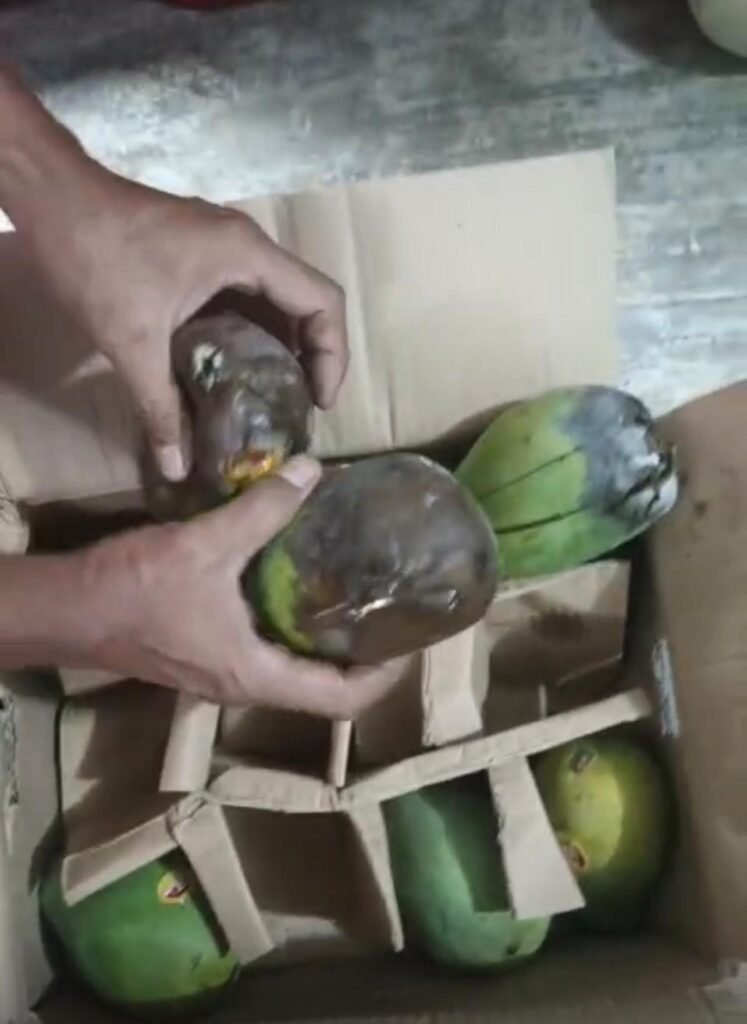
Harumanis mangoes during the rainy season tend to spoil more quickly compared to the dry season. This is mainly influenced by environmental factors such as increased humidity, higher moisture content in the fruit, and the presence of pests and microorganisms.
Understanding these factors is important, especially in relation to post-harvest handling, storage, and distribution.
Causes of Harumanis Mango Spoilage in the Rainy Season
1. Higher Moisture Content in the Fruit
During the rainy season, mango trees absorb more water from the soil. As a result, Harumanis mangoes contain higher moisture levels, making the fruit softer and more prone to damage.
2. High Humidity Promotes Fungi and Bacteria
High humidity accelerates the growth of microorganisms such as fungi and bacteria. One of the most common fungi affecting mangoes is Colletotrichum, which causes anthracnose.
3. Increased Skin Vulnerability
Continuous exposure to rain can lead to the formation of microscopic cracks (microcracks) on the fruit skin. These cracks serve as entry points for spoilage-causing microorganisms.
4. Unstable Weather Conditions
Fluctuations between rain and heat affect the ripening process. This can result in uneven ripening and faster quality deterioration.
5. Latent Infection from the Tree
Certain fungal infections may occur while the fruit is still on the tree without showing visible symptoms. These latent infections often develop into spoilage after harvest, particularly during storage or transportation.
6. Fruit Fly Infestation in Mangoes
Fruit flies (Bactrocera spp.), especially Bactrocera dorsalis, are a major cause of mango damage during the rainy season.
Female fruit flies lay eggs inside the fruit. Once hatched, the larvae feed on the pulp, leading to:
- softening of the fruit
- internal black or brown spots
- accelerated spoilage
This type of damage is often not visible externally in the early stages.
Impact During Mango Distribution and Shipping
In practice, Harumanis mangoes are usually shipped in a mature but unripe condition to extend shelf life.
However, it is common that:
- the fruit appears normal at the time of shipment
- but after reaching the destination and ripening
- internal damage becomes visible
This is typically caused by latent infections or undetected fruit fly infestation. As a result, mangoes may arrive at the customer’s location fully ripe but already affected by internal spoilage.
Conclusion
Harumanis mangoes during the rainy season are more prone to spoilage due to a combination of factors, including higher moisture content, increased humidity, microbial growth, and fruit fly infestation (Bactrocera spp.).
In addition, damage is not always visible at the early stage. Mangoes that appear in good condition during shipment may develop internal spoilage after ripening, particularly if they have been previously affected by latent infections or pest activity.