
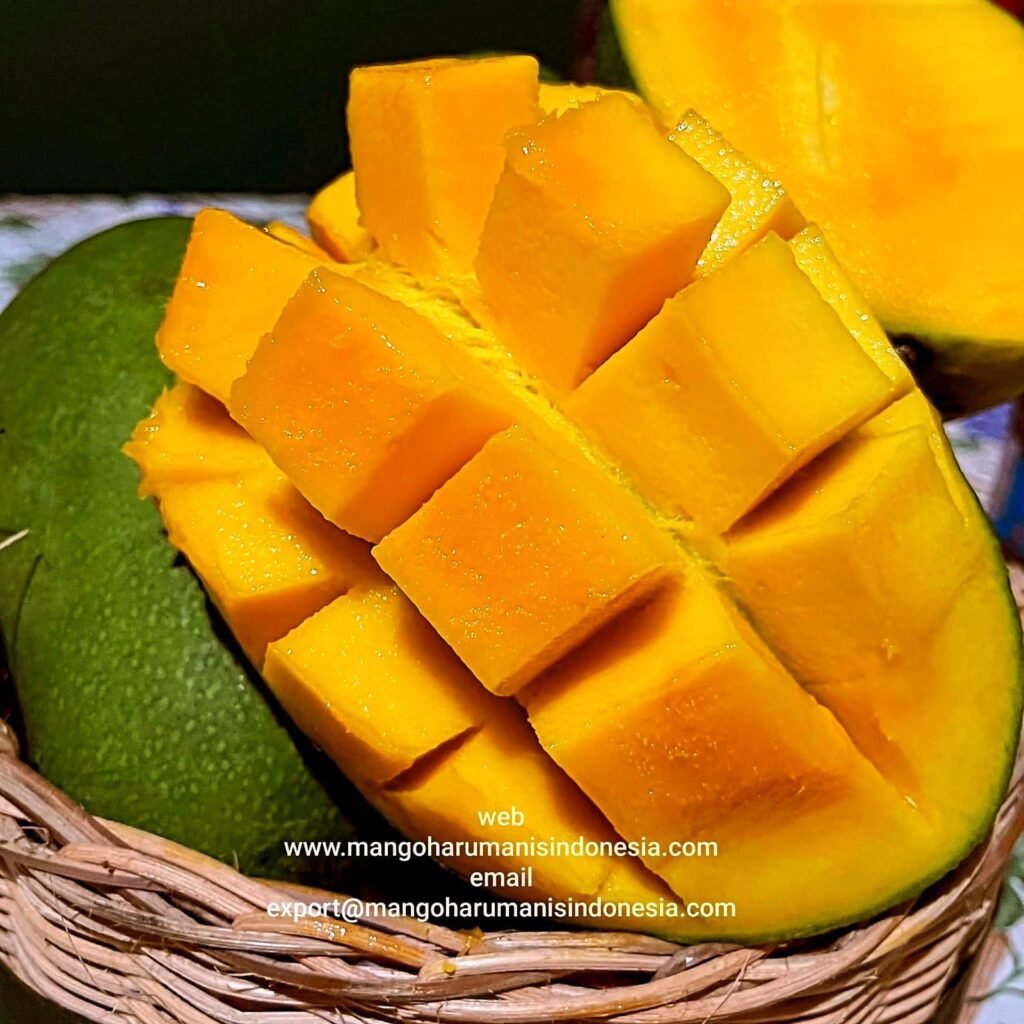
Mango seasons in Indonesia vary depending on the variety. Types such as Harumanis, Manalagi, Gedong Gincu, and Arumanis are mostly harvested between September and December. The production areas of these varieties are spread across East Java, Central Java, West Java, and East Nusa Tenggara (NTT). In Jombang, East Java, the peak harvest usually occurs between October and December, including nearby regions such as Mojokerto.
From September to December can be considered the main mango harvest season, although this also depends on weather conditions. In general, Indonesia’s weather and seasons can still be predicted, but not as accurately as before, as climate patterns have become more unpredictable due to global climate change. Nowadays, the seasonal shifts often occur 1–2 months later than in the past. For example, the rainy season used to start around October or November, but now it can be delayed until December or even January.
Weather and seasonal changes have a major impact on mango harvests, both in terms of fruit quantity, quality, and timing.
• Mango trees need dry weather to flower.
Mango trees can only bloom optimally during the dry season when rainfall is low and temperatures are warm. If rain falls during the flowering stage, the flowers may drop and fail to form fruit. Therefore, if the rainy season arrives earlier than usual, many trees fail to bear fruit or produce fewer yields.
• Excessive rainfall can trigger diseases.
Humid weather and continuous rain can promote fungal and pest attacks such as anthracnose, powdery mildew, and fruit flies. As a result, the fruits may develop black spots, rot, or fall before ripening.
• Prolonged drought also poses risks.
If the weather is too dry without additional irrigation, trees can experience water stress, leaf growth disturbances, and smaller fruit size. Moreover, extremely high temperatures can cause fruits to ripen too quickly on the tree, reducing their sweetness.
• Uncertain seasons shift harvest timing.
Normally, mango harvest seasons follow a predictable pattern (for example, October–December). However, if the dry season extends or the rains arrive late, the flowering and harvesting periods can shift forward or backward by 1–2 months. This makes export scheduling difficult to predict based only on previous seasonal patterns.
• Farmers are adapting.
Today, many farmers use flower-inducing techniques (such as KNO₃) to help trees bloom even under less-than-ideal weather conditions. Some also use drip irrigation and water management systems to simulate dry-season conditions artificially.